
Fuel delivery for home builders and subdivision work
A new subdivision burns fuel long before the first family moves in. Dozers, excavators, skid steers, compactors, light towers and generators work through clearing, utilities, streets and vertical construction, and a steady fuel plan keeps crews from losing hours driving cans back and forth to a station.
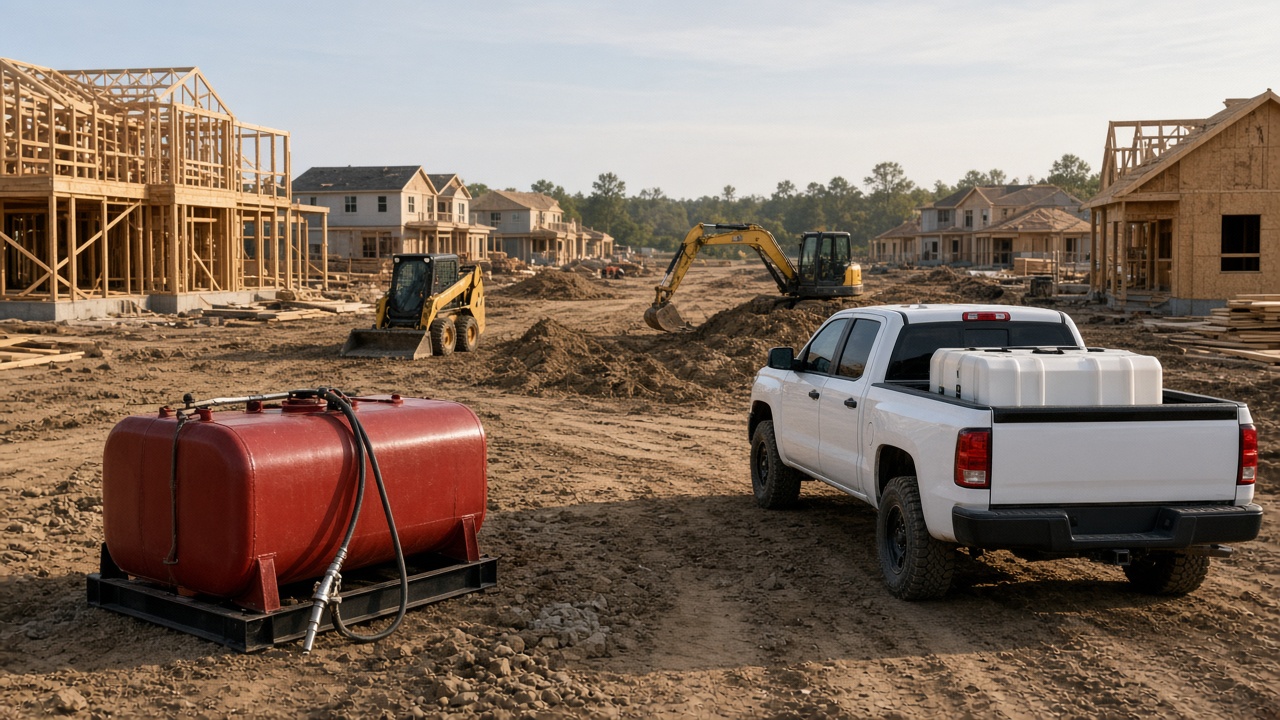
Match fuel to each phase
Clearing, grading and utility work bring the heaviest equipment and the biggest daily gallons. Once streets are in and framing starts, fuel use shifts toward skid steers, telehandlers, generators and the crews' trucks.
Tell your distributor which phase the site is in and how long it should last. A plan that fits mass grading may be too much fuel once vertical work begins, and adjusting delivery frequency as the work changes helps avoid waste.
Jobsite tanks or wet-hosing
Many builders set a skid tank or a double-wall jobsite tank near the staging area so operators can fuel up at shift start. Others have a fuel truck come out and fill each machine directly where it is parked, which is often called wet-hosing.
Wet-hosing keeps fuel off the site overnight and saves operators time, but it depends on machines being reachable when the truck arrives. Our guides on construction site fuel trucks and wet-hosing a jobsite compare the two approaches.
Dyed and clear diesel on one site
Off-road equipment that never runs on public roads may qualify for dyed diesel, while pickups and dump trucks that drive on roads need clear ULSD. Dyed diesel is for off-road use only, and using it in a road vehicle can bring federal penalties.
If the site needs both, keep them in separate marked tanks and list them as separate products on every order. Builders with gas-powered tools or light towers should add gasoline as its own line with its own container or tank.
Protect fuel on an open site
Subdivisions are often open at night and on weekends, which makes unattended tanks and parked equipment an easy target. Lock tank fill caps and nozzles, park machines in a lit area, and keep track of gallons delivered against gallons used.
Some builders choose wet-hosing or smaller tanks to limit how much fuel sits on site at any time. Our guide to preventing diesel fuel theft lists practical steps that work on active jobsites.
Give the driver a clear route
New subdivisions change week to week as streets are cut, lots are graded and houses go up. Send the distributor a current lot or phase number, a drop pin, the gate or entrance to use and a site contact who answers the phone.
Bulk Fueling lists distributors who publish dyed diesel, ULSD and jobsite tanks for your ZIP. Read each profile, then request a quote with the equipment list, typical gallons per day and the expected length of the job.
Questions
Can home builders use dyed diesel?
Off-road equipment that never runs on public roads may qualify for dyed diesel. Pickups, dump trucks and anything else that drives on public roads need clear ULSD, so keep the two products in separate marked tanks.
Should a subdivision use a jobsite tank or wet-hosing?
It depends on fuel use, security and how reachable the machines are. A tank suits steady daily use, while wet-hosing limits fuel left on site and saves operators time. Many builders change methods as the project moves through phases.
What should a builder's fuel quote request include?
Include the site address or drop pin, the products needed, the equipment list, typical gallons per day, the entrance to use, delivery hours and how long the job is expected to last, plus a site contact who answers the phone.