
Diesel tank cleaning: when your tank needs it
Every diesel tank collects something over time. Water condenses, rust and sediment settle, and microbes can grow where fuel meets water. When that buildup starts reaching filters and engines, cleaning the tank itself may be the only real fix.
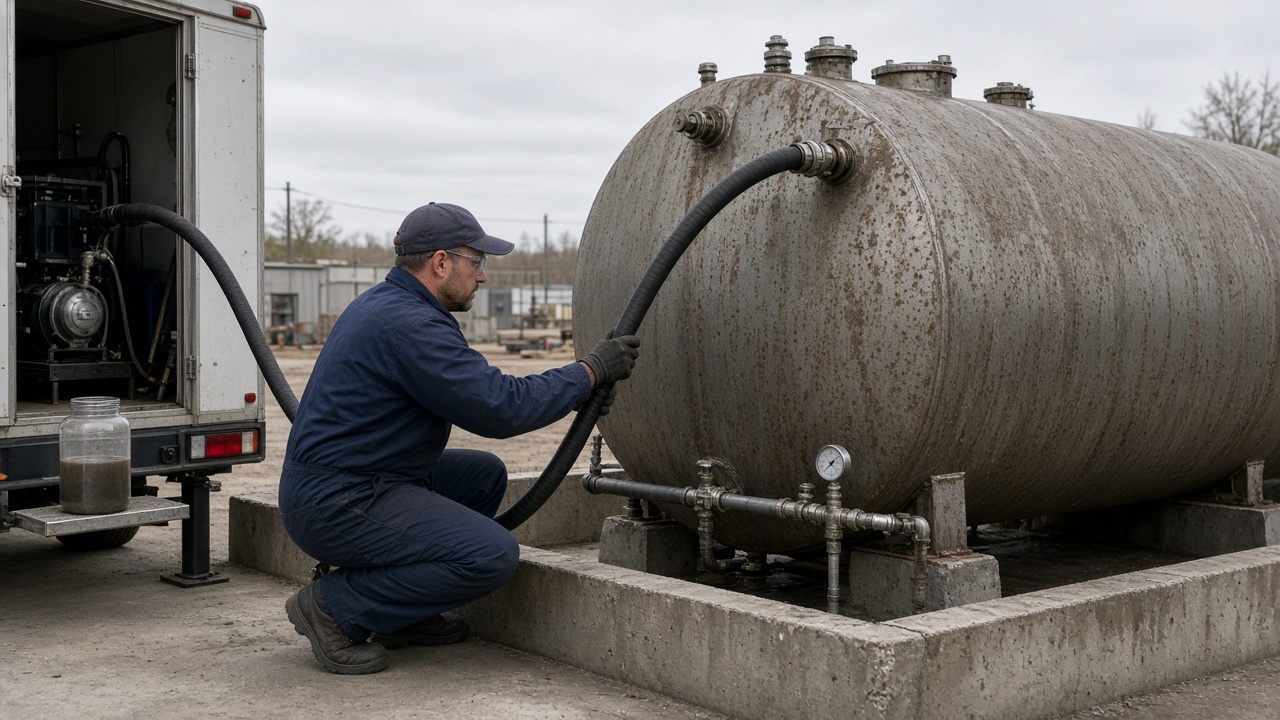
Signs a tank needs attention
Filters that plug faster than they used to, fuel that looks dark or hazy in a sample, water found at the bottom of the tank, or slime and sludge on a sample jar are all common signs that contamination has built up inside.
Generator tanks and other tanks that sit for long stretches between fills are often the first to show trouble. Fuel that turns over slowly has more time to collect water and grow microbes before it gets used.
Polishing the fuel or cleaning the tank
Fuel polishing circulates the fuel through filters and water separators to clean the fuel itself. It can work well when the problem is mostly in the fuel. Our guide to diesel fuel polishing explains how that service usually works.
Tank cleaning goes further. It removes the sludge, sediment and biofilm stuck to the tank floor and walls, which polishing alone may not reach. Service companies often pair the two so the clean fuel goes back into a clean tank.
What the work usually involves
A typical job starts with testing the fuel, then moving it out to temporary storage or a filtration rig, removing water and sludge, and cleaning the inside of the tank. The contaminated waste then has to be disposed of properly.
Some tanks can be cleaned from outside through access ports, while others need a worker to enter the tank. Tank entry is confined-space work with its own safety rules, so ask how the company handles it and what they need from you.
Keep the tank cleaner afterward
Check for water regularly and drain it off, keep caps and vents tight, and replace filters on schedule. Our guide to water in diesel tanks covers simple checks you can do between service visits.
Ask whether the service company recommends regular fuel testing or a biocide treatment for your tank. How often a tank needs attention depends on how fast the fuel turns over and the conditions it sits in.
Working with your fuel distributor
Tell your distributor when a tank cleaning is planned. You may want to run the tank low beforehand and schedule a fresh delivery right after the work is done, so you are not paying to clean extra fuel.
Some fuel distributors offer tank services themselves or can refer you to a company that does. Search your site ZIP on Bulk Fueling and check each profile for tank and equipment services along with fuel.
Questions
How often should a diesel tank be cleaned?
There is no single schedule. It depends on how fast the fuel turns over, how much water gets in, and what fuel tests show. Many owners test the fuel regularly and clean the tank when results or filter problems point to buildup.
Can the fuel be saved when a tank is cleaned?
Often, if testing shows the fuel can be filtered back into shape. Badly degraded or heavily contaminated fuel may need to be disposed of instead. The service company should test the fuel and explain the options first.
Does Bulk Fueling clean fuel tanks?
No. Bulk Fueling is a free directory that helps buyers find fuel distributors. It does not clean tanks or publish prices. Search your ZIP and ask distributors whether they offer tank services or a referral.