
Diesel fuel testing for bulk storage tanks
A bulk diesel tank can look fine from the outside while water, sediment or microbes build up inside. Fuel testing gives you a clear reading before filters plug, engines stumble or a standby generator fails when you need it most.
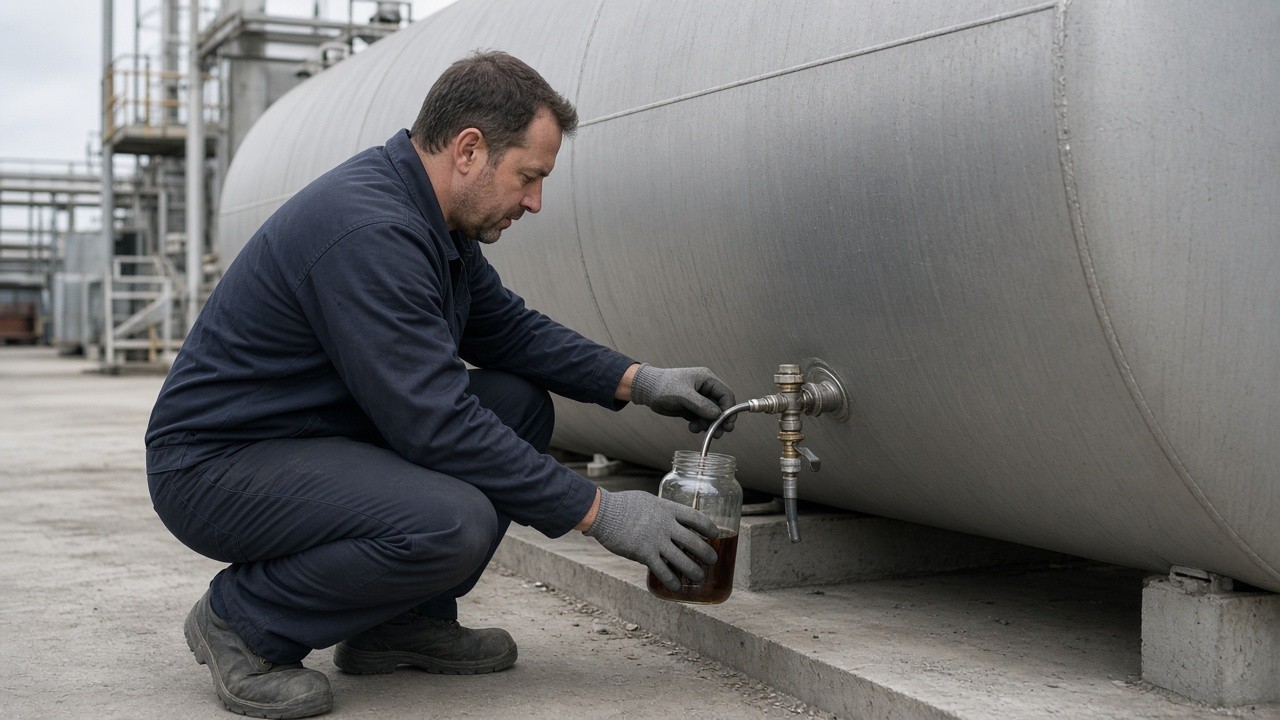
When testing is worth doing
Test after a string of filter changes, when a sample looks hazy or dark, when water shows up on a stick or paste, or when several units fed from the same tank start hard. Generator tanks and other slow-turnover tanks are common candidates.
Many fleet and facility managers also test on a set schedule, such as every few months for an active yard tank, so they catch slow problems before they turn into downtime. Ask a fuel lab how often fits your tank and how fast the fuel turns over.
What labs usually check
Labs often compare a sample against ASTM D975, the main U.S. diesel fuel specification, along with checks for water, sediment, particulates and microbial growth. Your lab can explain which methods fit your tank and how to read the report.
A clear bottom sample matters. Water and sludge settle, so a sample taken only from the top of the tank can miss the problem. Ask the lab how to draw the sample and what container to use so the result is useful.
Reading the results
A report that shows free water, high sediment or microbes usually points to action, not just a note in a file. Options can include draining water, polishing the fuel, treating microbes or cleaning the tank, depending on what the lab finds.
Our guides to water in diesel tanks, diesel fuel polishing and diesel tank cleaning walk through those next steps. Share the report with your distributor or tank service company so they recommend the right work instead of guessing.
Delivery checks and storage habits
Some buyers sample a delivery before it goes into the tank, especially after a quality issue. Ask your distributor what paperwork comes with each load and whether they can hold a sample if you ever need to compare a delivery against your tank.
Between lab tests, drain free water when you find it, keep caps and vents in good shape and replace filters on schedule. Our diesel fuel shelf life guide covers how long stored diesel tends to stay usable and what shortens that window.
Working with your fuel distributor
Tell your distributor when you plan a test or a cleanup. You may want to run the tank lower before polishing or cleaning, then schedule a fresh delivery once the tank is ready again.
Some distributors offer tank and fuel services themselves or can point you to a lab or service company. Search your site ZIP on Bulk Fueling and ask about tank services along with fuel when you request a quote.
Questions
How often should I test diesel in a bulk tank?
There is no single schedule. It depends on how fast the fuel turns over, the tank's history and how critical the equipment is. Ask a fuel lab for a plan that fits your tank, and test sooner if filters or engines start showing trouble.
Is a visual check enough?
A clear jar sample can catch haze, free water or dark sludge, but it will not show dissolved water or microbes. Lab testing is the way to confirm what a visual check only hints at.
Does Bulk Fueling test fuel?
No. Bulk Fueling is a free directory that helps buyers find fuel distributors. It does not test fuel or publish prices. Search your ZIP and ask distributors whether they offer testing, tank services or a referral.