
Diesel fuel polishing explained
Diesel that sits in a tank for months can pick up water, sediment and microbial growth. Fuel polishing pulls that fuel out of the tank, runs it through filters and water separators, and sends it back cleaner, so generators and equipment do not choke on dirty fuel when they need it.
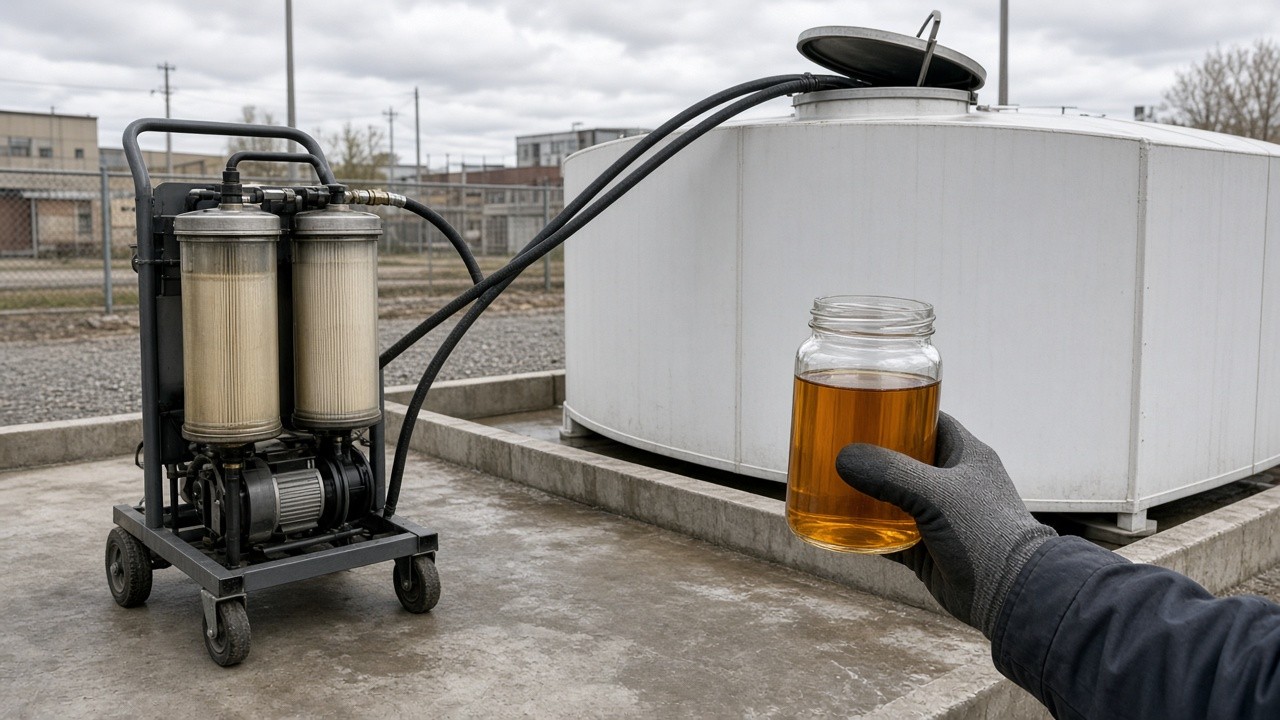
What polishing actually does
A polishing rig, often a cart or a truck-mounted unit, draws fuel from the bottom of the tank where water and sludge settle. It pushes that fuel through a series of filters and a water separator, then returns it to the tank.
The rig keeps circulating the fuel until the tank has turned over several times and the samples come back clear. Some sites also install a permanent polishing system that runs on a timer to keep stored fuel in shape between uses.
Signs a tank needs attention
Watch for clogged filters on the equipment that draws from the tank, a hazy or dark fuel sample, water at the bottom of a sample jar, or a slimy layer between water and fuel. Any of these means it is time to look closer.
Tanks that sit for long stretches are the usual candidates: standby generators, seasonal equipment, and backup tanks at farms or marinas. A tank that turns over fuel every week is less likely to build up problems, but it can still take on water.
Polishing versus tank cleaning
Polishing cleans the fuel. It can also stir up and remove some loose sludge, but it is not the same as cleaning the tank itself. Heavy buildup stuck to the tank walls or floor usually takes a full tank cleaning.
A tank cleaning often means pumping the tank down, removing the sludge and water, and cleaning the inside surfaces before fresh or polished fuel goes back in. Ask the service company which job your tank needs and why.
Keep water out in the first place
Most fuel problems start with water. Check the fill cap and vent, keep the tank area drained, and pull a sample from the bottom on a regular schedule. Our guide to water in diesel tanks covers the checks in more detail.
Buy only what you can use in a reasonable time and keep the tank topped off to cut down on the air space where condensation forms. Our guide to diesel shelf life explains how storage time and conditions affect stored fuel.
Booking polishing and fuel together
Some fuel distributors offer polishing or tank services, and others work with a separate tank service company. Search your site ZIP and read each profile, then ask in your quote request whether they can test, polish, or clean.
Give them the tank size, how much fuel is in it, how long it has sat, and what you have seen in samples or filters. If the fuel is too far gone, ask about removing it and having a fresh load delivered.
Questions
How often should a diesel tank be polished?
It depends on how long the fuel sits, how much water gets in, and what the samples show. Many owners of standby and seasonal tanks set a regular sampling routine and polish when the samples call for it, rather than on a fixed date.
Can polishing save badly contaminated diesel?
Polishing can remove water, sediment, and much of the microbial debris, but fuel that has broken down badly may not be worth saving. A fuel test and the service company's advice will tell you whether to polish it or replace it.
Does Bulk Fueling list fuel polishing prices?
No. Bulk Fueling is a free directory and does not publish prices. Search your site ZIP, read the profiles of distributors near you, and ask in your quote request whether they offer fuel testing, polishing, or tank cleaning.