
On-site fueling services for fleets and equipment
On-site fueling brings the fuel to where your trucks, machines and tanks already sit, so nobody drives to a station or hauls cans. Distributors offer it in a few different forms, and the right one depends on how many units you run, whether you have a tank, and when your equipment is parked.
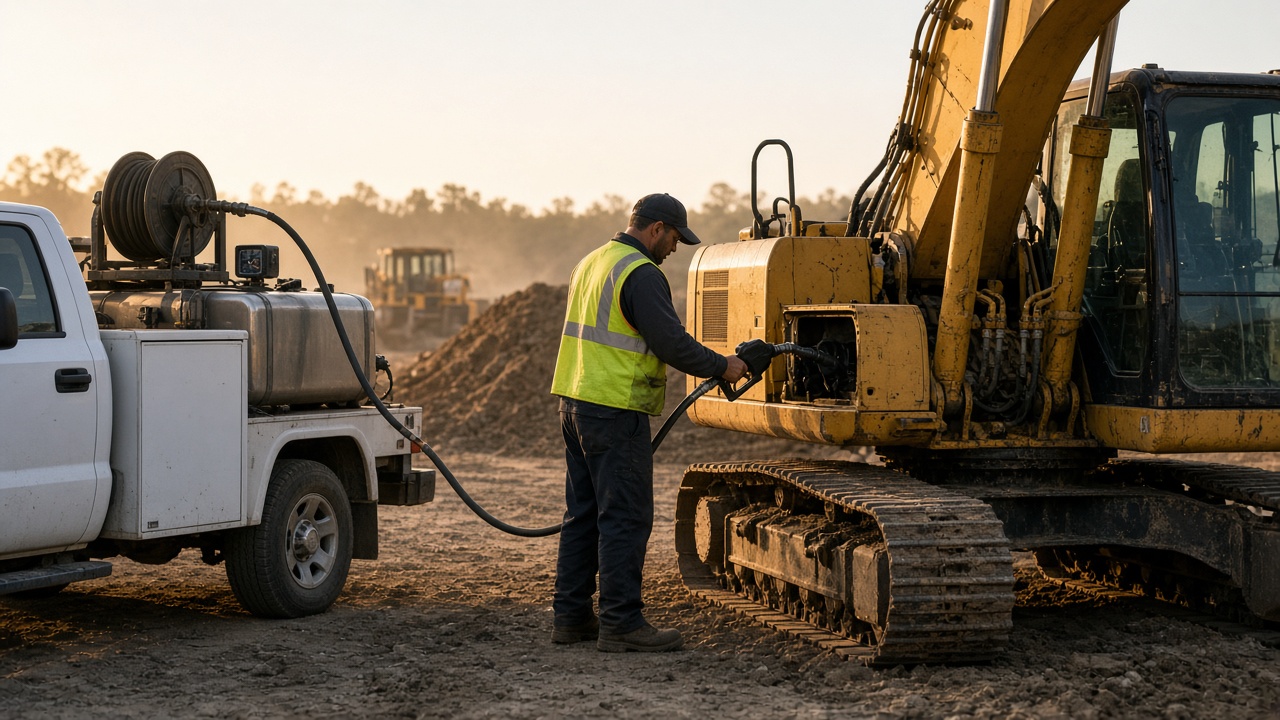
Three kinds of on-site fueling
A bulk tank fill is the simplest: the truck tops off your own aboveground tank, and your crews fuel from it. It fits yards and jobsites with steady use and somewhere safe to keep a tank, owned or rented.
Wet-hose fueling, sometimes called direct-to-equipment fueling, skips the tank. A driver goes unit by unit and fills each truck, excavator, loader or light tower from a metered hose, usually overnight or before the shift starts.
Generator and equipment top-offs cover standby generators, light towers, pumps and heaters that need fuel on a schedule. Many sites use a mix of all three, so describe everything that burns fuel when you ask for a quote.
Set up the unit list and access
For wet-hose service, send a list of unit numbers, the fuel each one takes, where each one parks and when it is parked. Flag anything with an unusual fill point, a locked cap or a separate DEF tank so the driver knows before the first visit.
Give gate codes or a lockbox plan, a site contact, where the truck enters and turns, and any lighting or safety rules. Park units so the fuel doors face an open lane, and keep the list current as machines come and go.
Clear and dyed diesel on one site
Road trucks and pickups need clear ULSD. Dyed diesel is for off-road use only, in equipment and uses that qualify, so a site with both should list each unit's product and keep the two separate on the tickets.
DEF is not a fuel, but many distributors can bring it on the same visit for units that use it. List DEF separately, with the tank or tote it goes into, if you want it included.
Records and reconciliation
Ask what each delivery ticket will show before service starts. Many distributors that offer wet-hose fueling can break gallons out by unit, product, date and site, which helps with job costing, fuel tax records and spotting a unit that burns more than it should.
Decide who on your side reviews the tickets and how often. Matching tickets to your unit list each week catches missed units, wrong products and billing questions early.
Find a distributor that offers it
Not every distributor runs wet-hose routes or works after hours. Search the delivery ZIP on Bulk Fueling, then read each profile for wet-hose, jobsite and after-hours service, along with the fuels you need.
Request quotes with your unit count, typical gallons, the products, the site hours and how often you want service. The clearer the request, the easier it is for a distributor to say whether they can cover it.
Questions
What is the difference between wet hosing and a tank fill?
A tank fill tops off your own storage tank and your crews fuel from it. Wet hosing skips the tank, and the driver fills each vehicle or machine directly from the truck's metered hose where it is parked.
Do I need my own fuel tank for on-site fueling?
Not for wet-hose service, since the driver fills each unit directly. If you want fuel on hand between visits, you can own or rent a tank, subject to local permit and fire code rules.
Can on-site fueling happen at night?
Many distributors that offer wet-hose fueling schedule it overnight or before the shift starts, when units are parked. Check each profile for after-hours service and confirm the window when you request a quote.