
Fuel for snow removal contractors and plow fleets
When a storm hits, plow trucks, loaders, and skid steers can run through the night, and every crew in town wants fuel the same day. Lining up delivery before the season starts keeps equipment out on the lots.
Know what runs on what
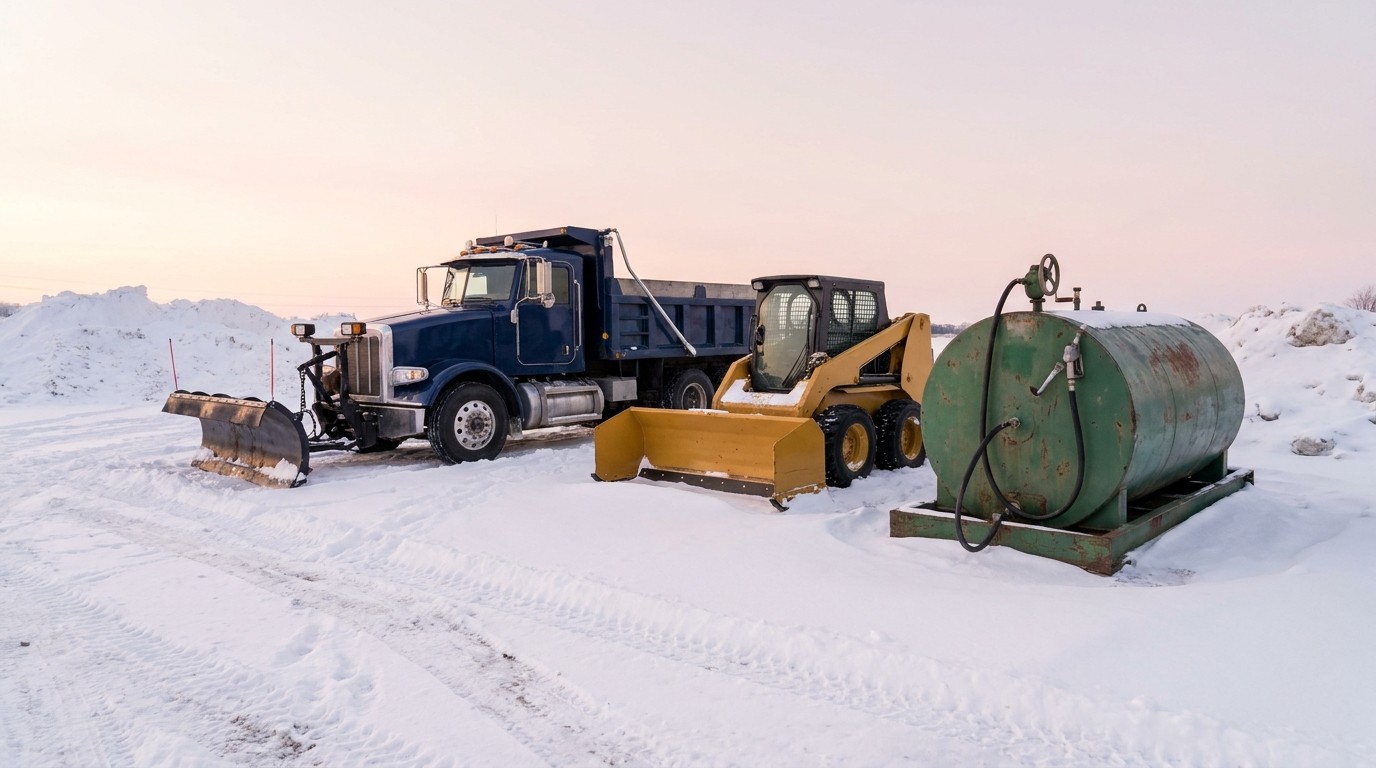
Most snow fleets mix plow trucks that drive on public roads with loaders, skid steers, and tractors that push snow on private lots. Some also run gasoline pickups, sidewalk machines, or salt spreaders.
Make a simple list of each unit, the fuel it takes, and roughly how many hours it runs in a storm. That list is the core of a good quote request and helps a distributor plan how much to bring.
Clear diesel, dyed diesel, and the road
Plow trucks that are licensed and driven on public roads take clear, taxed ULSD. Dyed diesel is for off-road use only, so never put it in the main fuel tank of a truck that drives on the road between lots.
Loaders, skid steers, and other equipment that never travel on public roads may qualify for dyed diesel in many states. The rules vary, so check with your state tax agency before you buy dyed diesel for any unit.
If you buy both, keep separate tanks clearly labeled, and list each product with its own gallons in the quote request. Ask the distributor how they keep products apart when they fill both on one visit.
Yard tanks and fuel on the lots
Many contractors keep a yard tank so trucks can fuel at the shop between pushes. Fill it before the season and again ahead of each forecast storm, since roads and delivery schedules both get tight once snow falls.
Equipment that stays parked on a big lot all winter can be fueled in place by a tank wagon, often called wet hosing. Tell the distributor where each unit sits and whether it is reachable after the lot is plowed.
Cold weather and fuel quality
Diesel can gel in hard cold, and water in a tank can freeze and block filters. Ask what winter blend or additive the distributor delivers, and drain water from tank bottoms before the cold settles in.
Our winter blend guide covers what to check in a yard tank. Equipment that sat unused since last spring should have its fuel and filters checked before the first storm, not during it.
Set it up before the first storm
Search the ZIP for your yard and your main lots, and check each profile for diesel, dyed diesel, and after-hours or emergency service. Not every distributor fuels at night or on weekends, so ask before you count on it.
In the quote request, list each product, the tank sizes, the units to fuel, and the hours your crews run during a storm. Ask how the distributor handles storm-week calls so you know what to expect when snow hits.
Questions
Can I use dyed diesel in my plow trucks?
Not in a licensed truck that drives on public roads. Dyed diesel is for off-road use only. Loaders and other equipment that stay on private property may qualify, but check your state tax agency for the rules that apply to you.
Will a distributor fuel my equipment during a storm?
Some offer after-hours or emergency fueling, and some do not. Bulk Fueling does not promise delivery times. Ask each distributor in the quote request how they handle storm calls and how early you should order.
How full should my yard tank be before winter?
Many contractors fill it before the season and top it off ahead of each forecast storm. Our tank sizing guide can help you pick a tank that covers a long storm without running low between deliveries.