
Fuel delivery for logging operations
Feller bunchers, skidders, loaders, and chippers burn a lot of diesel, and most of it happens miles from the nearest fuel stop. A distributor that can reach the landing, or keep a fuel trailer or yard tank full, keeps the crew cutting instead of hauling cans.
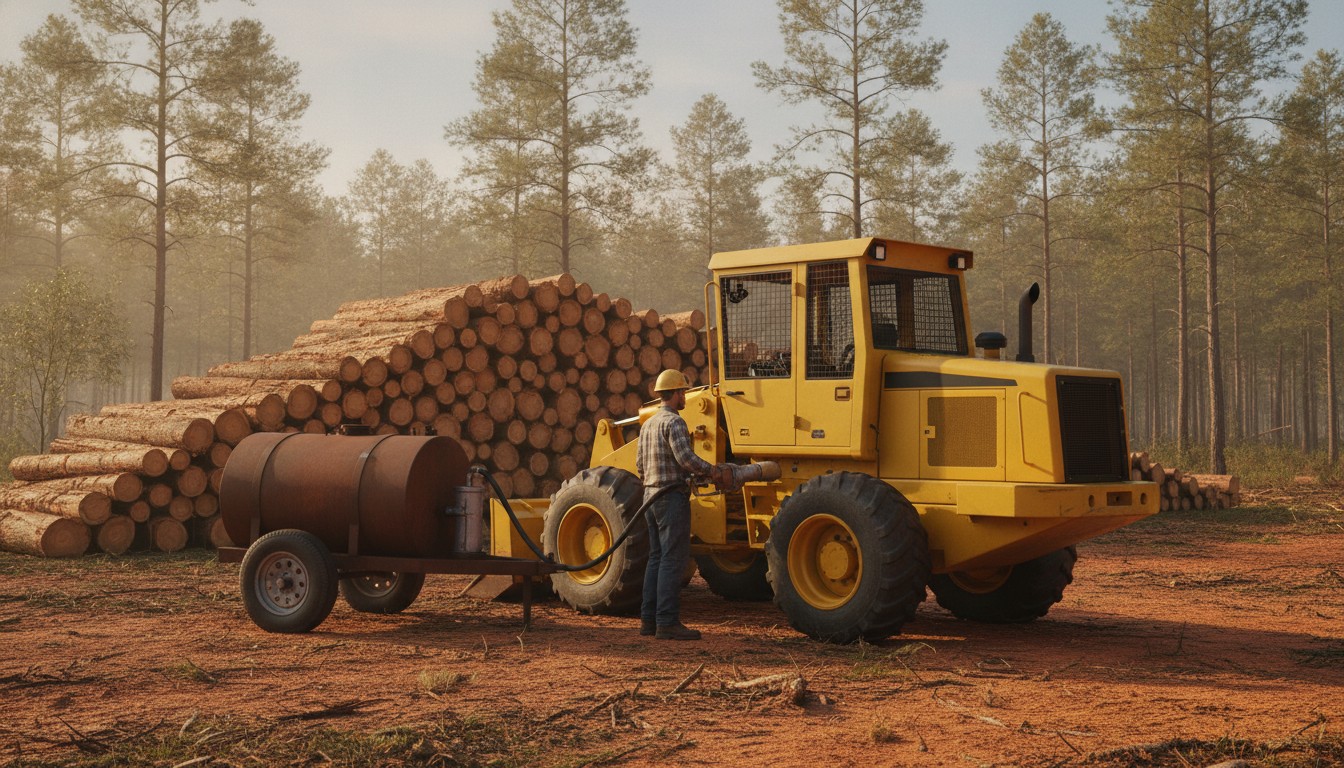
Count the machines and the miles
List every unit that needs fuel at the landing: feller bunchers, skidders, forwarders, loaders, delimbers, chippers, dozers, and service trucks. Note roughly how many gallons each burns in a day and which ones also take DEF.
Then note how far the landing sits from a paved road and what the woods road looks like. A distributor needs to know whether a loaded fuel truck can get in, or whether the crew should meet the truck closer to the highway.
Fuel at the landing or at the shop
Some crews have a tank wagon drive straight to the landing and fill each machine where it is parked. That works when the road is solid, the landing has room to turn around, and someone can meet the driver on site.
Other crews keep a fuel trailer or skid tank on the landing and have it filled at the shop, the yard, or a meeting point near the road. Tell the distributor which setup you use and how many gallons the trailer or tank holds.
Dyed diesel for the woods, clear diesel for the road
Off-road logging equipment is a common use for dyed diesel, but log trucks and pickups that drive on public roads take clear, taxed diesel. Dyed diesel is for off-road use only, so keep it out of anything that runs on the highway.
Rules for dyed diesel and fuel tax credits depend on federal and state tax law. Check with the IRS and your state tax agency before you order, and keep separate, labeled tanks or trailers for each product so they do not get mixed.
Moving landings and changing roads
Landings move as a tract is cut, and woods roads change with the weather. Send the distributor a pin drop for each new landing and warn them about soft ground, washouts, or gates that lock after hours.
Rain can turn a good road into a stuck truck. Agree up front on what happens when the road is too wet for a delivery, whether that means meeting at the road, delivering early, or moving the drop to the next dry day.
Ordering through Bulk Fueling
Search the ZIP closest to the tract you are working, then check each profile for dyed diesel, clear diesel, DEF, mobile fueling, and the tank wagon badge. Rural farm co-ops and local oil companies may also cover timber country.
In the quote request, list the machines, the weekly gallons, the trailer or tank size, the road conditions, and the crew's start time. Say whether you want deliveries on a fixed schedule or on call as the job moves.
Questions
Will a fuel truck drive to a logging landing?
Some distributors will if the road can carry a loaded truck and the landing has room to turn around. Check each profile for mobile fueling and describe the road and the landing in your quote request.
Can log trucks run on dyed diesel?
No. Dyed diesel is for off-road use only, and log trucks that drive on public roads take clear, taxed diesel. Off-road machines at the landing are a different case, so check the rules with the IRS and your state tax agency.
Does Bulk Fueling list fuel prices for logging crews?
No. Bulk Fueling is a free directory and does not publish fuel prices. Search the ZIP for your tract, compare the profiles that fit, and request quotes from the distributors that serve your area.