
How to inspect an aboveground fuel tank
An aboveground fuel tank can look fine from across the yard and still be rusting at the saddles or weeping at a fitting. A simple, regular walk-around catches most problems early, before they turn into a spill, a bad batch of fuel, or a failed inspection.
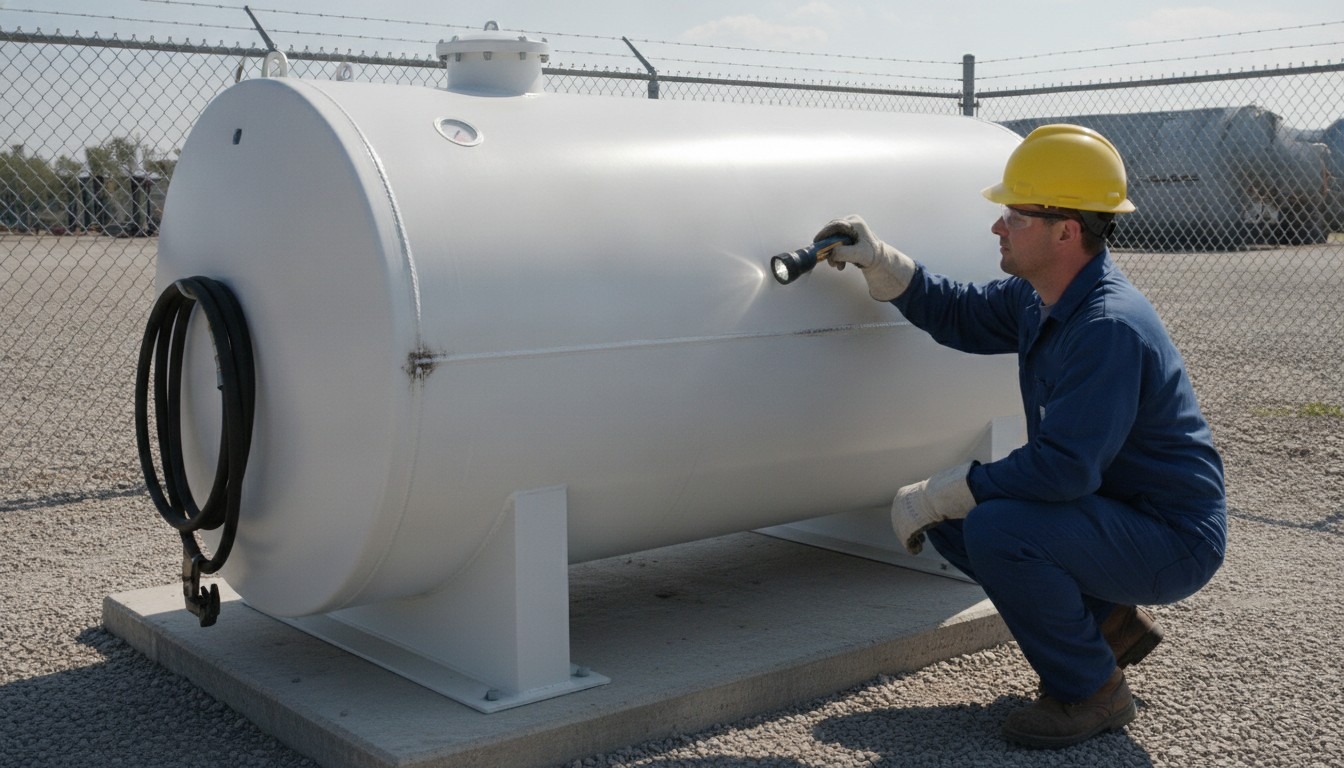
Why inspections matter
Leaks, rust, and water in the tank cost money long before anyone notices a puddle. Lost fuel, clogged filters, and cleanup bills all trace back to small problems that a quick look could have caught months earlier.
For sites covered by the federal SPCC rule, inspection is also part of compliance. If your site has a spill plan, your inspection schedule should match what the plan says. Our SPCC guide explains when the rule applies to a site.
What the SPCC rule asks for
Under 40 CFR 112.8(c)(6), onshore facilities covered by the rule must test or inspect each aboveground container for integrity on a regular schedule and whenever material repairs are made, following industry standards.
The same section says to inspect the container's supports and foundations, to frequently inspect the outside of the tank for deterioration, leaks, and oil built up inside diked areas, and to keep records. Read the full text on eCFR for the details.
Industry standards like STI SP001
The Steel Tank Institute publishes SP001, the Standard for the Inspection of Aboveground Storage Tanks, which many owners use to set their schedule. It covers inspector qualifications, routine inspections, formal inspections, and recordkeeping.
STI offers free monthly and annual checklists for owners. Its checklists say the routine visual inspection can be done by the owner's own inspector, while some findings call for an engineer, a certified inspector, or the tank maker.
A basic walk-around
Look at the tank shell for rust, dents, bulges, and wet spots. Check the saddles, legs, and pad for cracks or settling, and make sure the tank still sits level. Look at every fitting, valve, hose, and nozzle for drips or stains.
On a double-wall tank, check the gauge or port for the space between the walls. In a dike or containment area, look for standing water or fuel. Make sure vents are clear, caps and locks are in place, and the level gauge works.
Water, fuel quality, and the distributor
Pull a sample from the bottom of the tank now and then and look for water or sludge. Water at the bottom feeds rust and microbes. Our water in diesel tanks guide covers how to remove it and when fuel polishing makes sense.
Your distributor fills the tank, but the inspections and records belong to the site owner. If a driver points out a leak, a bad fitting, or a broken gauge, fix it before the next drop so the tank is safe to fill.
Questions
How often should I inspect my fuel tank?
It depends on the tank, the site, and any rules that apply to it. SPCC sites must follow a regular schedule set by industry standards, and STI publishes monthly and annual owner checklists. Your tank maker's guidance also applies.
Do I need a certified inspector?
Sometimes. STI's checklists say an owner's inspector can do the routine visual checks, while some findings call for a certified inspector, an engineer, or the tank maker. Check your SPCC plan and the standard for your tank.
Will a fuel distributor inspect my tank?
The tank owner is responsible for inspections. Some distributors also sell, rent, or service tanks, so check each profile for the bulk tanks badge and ask whether they offer tank service in your area.